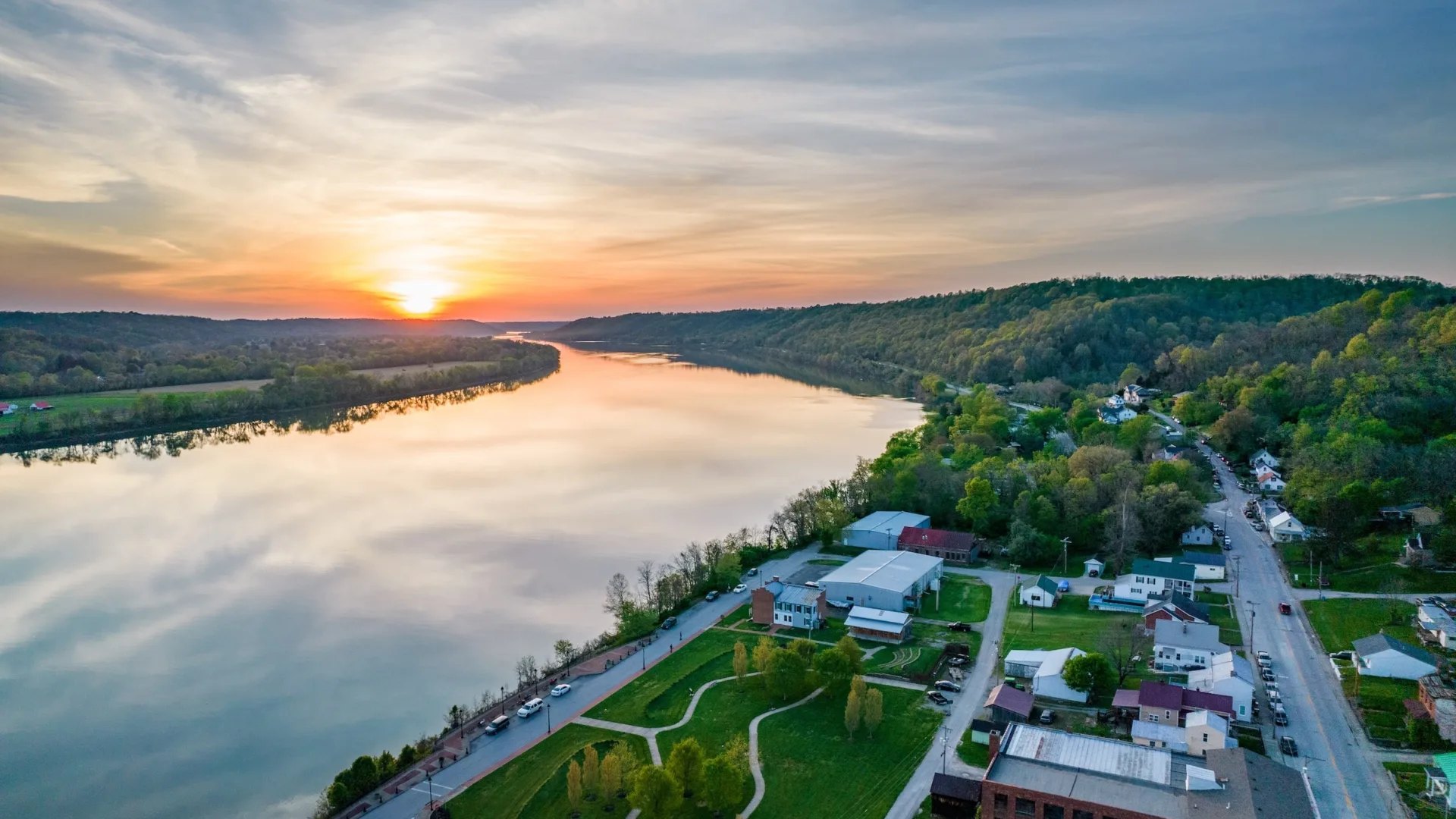
Aerial photograph of the Ohio River at sunset, a small river town along its bank

Cincinnati · Northern Kentucky · Ripley, Ohio

The Underground Railroad Driving Tour

Ten documented stops along the road to freedom — a slave pen in Cincinnati, floorboards that hid people in Maysville, a hilltop house that sheltered two thousand, and the man who rowed back across the river nine hundred times. Real names, real dates, real numbers: history first, and folklore labeled wherever it appears.

12 narration tracks ≈ 29 minutes of storytelling 110–130 miles · a full day's drive Researched October 19, 2026
See the route

How to run it in the car

Built for the road: phone in hand, stories through the car speakers, directions a tap away.

1

Connect the phone

Pair your phone to the car with Bluetooth, CarPlay, Android Auto, or an aux cord. Press play before you roll — the driver drives, the passenger runs the phone.

2

Follow the route

Every stop has a Directions button that opens the drive in Google Maps. Take the stops in order — the narration is written to hand you off from one stop to the next, Cincinnati to Ripley.

3

Play the story as you arrive

As you pull up to each stop, press its play button (or just let the full tour keep rolling). Each track is the documented story of the ground in front of you. Every track is also downloadable as an MP3, so you can save the set and share it.

The route at a glance

One river, one direction: Cincinnati riverfront → Walnut Hills → the West End → across the river to Covington → southeast along the Kentucky bank to Maysville and Old Washington → across to Ripley for the finish. Roughly 110–130 miles, a full day — and it can be run in reverse just as well. Best days: Friday and Saturday, the only days every ticketed stop is open.

The stops & their stories

Press play as you arrive at each one. Two elders tell these stories — her voice carries the women's stories, his carries the men's — the way this history was always passed down. Every story is told straight from the documented record — real accounts with names, dates, and numbers — and where a stop carries a legend, the legend is labeled as folklore, never dressed up as fact.

Photograph of the National Underground Railroad Freedom Center entrance in Cincinnati
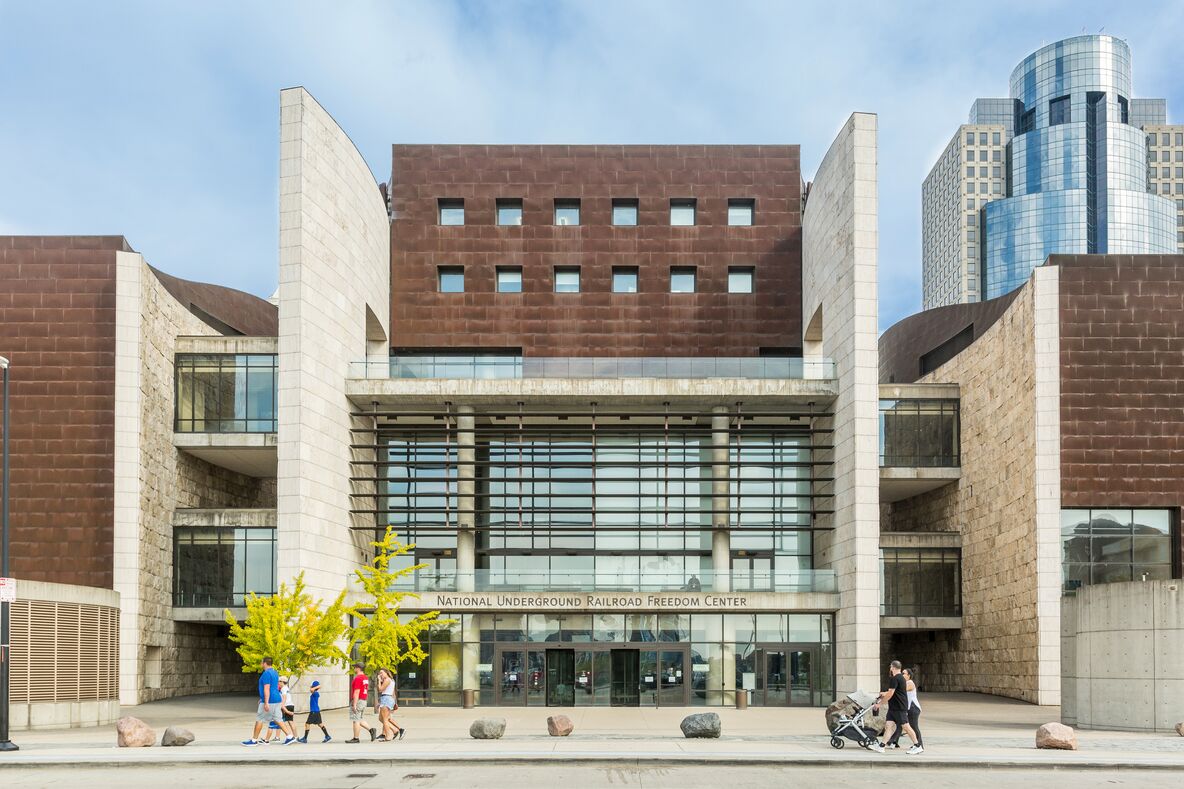
The National Underground Railroad Freedom Center, 50 E Freedom Way — photo via CANUSA.
1STOP

National Underground Railroad Freedom Center

50 E Freedom Way, Cincinnati, OH 45202 · Opened 2004 · On the riverfront, blocks from the historic landings

Public museum · ticketedWed–Sun, 10am–5pm (closed Mon/Tue)Adults about $15–20

Opened in 2004 on the Cincinnati riverfront, blocks from where freedom seekers crossed the Ohio River, the center's principal artifact is the thing itself: a two-story log slave pen, 21 × 30 feet, built circa 1830 in Mason County, Kentucky — described by the museum's own curators as the only known surviving rural slave jail in the United States. It was dismantled log by log and rebuilt inside the museum. Stand in front of it first: it is why every hiding place on this road existed — and it came from the same Mason County as stops 6 and 7. The river was the whole story in miniature: Kentucky kept slavery legal to the very end — the Emancipation Proclamation of 1863 freed no one there, because Kentucky had never left the Union — and slavery on the far shore lasted until the Thirteenth Amendment in December 1865. On this side, Cincinnati's large free Black community did the dangerous work of watching the river, hiding the runners, and moving them north — among them Levi Coffin, the "President of the Underground Railroad," who counted more than 3,000 people helped during his twenty Cincinnati years. You'll meet him again at the final stop.

Why here — Cincinnati's riverfront was the crossing point from slave-state Kentucky into free-state Ohio. The museum anchors the whole tour, geographically and historically: the road north started at this bank.
Directions Download MP3
Read the narration script
Welcome, child. Before we drive one mile, we start here — at the Freedom Center, on the Cincinnati riverfront. Look at the river. On the far side is Kentucky, where slavery was the law. On this side, Ohio — free ground. But understand what that river really was. It was only a few hundred yards of cold, moving water — and it was the line between being owned and being free. Kentucky held on to slavery to the very end: even when the Emancipation Proclamation came in eighteen sixty-three, it did not free one soul in Kentucky, because Kentucky had never left the Union. Slavery stayed legal on that far shore until December of eighteen sixty-five, when the Thirteenth Amendment finally ended it everywhere. So for decade after decade, this river was the most important water in America. Thousands crossed it in the dark — in skiffs, on the ice, sometimes swimming — and this museum stands where so many of them first stood free. Cincinnati in those days had one of the largest free Black communities in the West, and that community did the dangerous work: watching the river, hiding the runners, feeding them, moving them north. The most famous conductor of all, Levi Coffin — folks called him the President of the Underground Railroad — worked right here in Cincinnati for twenty years, and by his own count helped more than three thousand people reach freedom. Remember his name; we will meet him again at the end of this road. Inside this building sits something you must see with your own eyes: a slave pen. Two stories of rough log, twenty-one feet by thirty, built around eighteen thirty in Mason County, Kentucky. Men, women, and children were chained inside it, waiting to be sold south — and being sold down the river was no figure of speech. It meant the cotton and sugar country, families scattered, most never to see home again. This pen is the only country slave jail known to survive in all of America — carried here log by log, so nobody could ever say it didn't happen. And hold on to this: that pen came out of Mason County — the same county this road will carry us through before the day is done, where farm families were hiding the very people the traders meant to sell. Hold that picture in your heart. Now... let's go see where the running was done.

Sources: National Park Service · National Underground Railroad Freedom Center · researched October 19, 2026

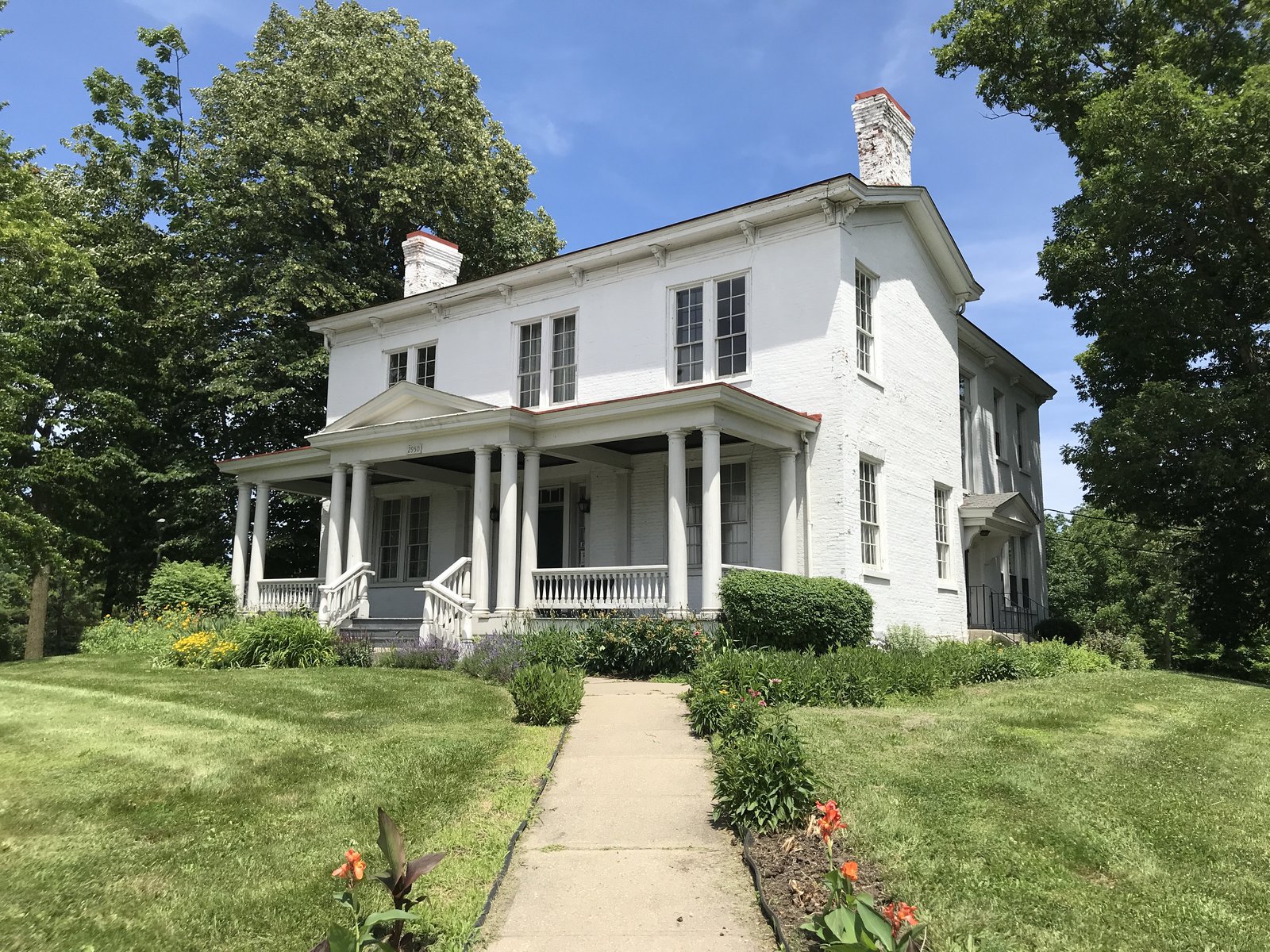
Photograph of the white two-story Harriet Beecher Stowe House with its columned porch in Cincinnati
The Harriet Beecher Stowe House at 2950 Gilbert Ave — the address is over the porch. Photo via Allied Window.
2STOP

Harriet Beecher Stowe House

2950 Gilbert Ave, Cincinnati, OH 45206 (Walnut Hills) · The Stowes lived here 1832–1850

Public · ticketedThu–Sat 10am–4pm · Sun 12pm–4pm (closed Mon–Wed)Adults about $8–9

Harriet Beecher Stowe lived in Cincinnati from 1832 to 1850 with her husband Calvin, a professor at Lane Seminary (stop 3). Uncle Tom's Cabin was published in 1852, two years after the family left — and scholars agree her Cincinnati years supplied the material: she crossed into Kentucky, talked with freedom seekers, and heard their stories firsthand. The house served freedom twice: a century later, as the Edgemont Inn, it was listed in the Green Book as a safe haven for Black travelers in the Jim Crow era. The book also grew out of grief: in 1849 cholera swept Cincinnati and took the Stowes' eighteen-month-old son, Samuel Charles — Harriet wrote that at his dying bed and his grave she learned what an enslaved mother feels when her child is torn away and sold. Uncle Tom's Cabin sold 300,000 copies in America in its first year alone.

Labeled tradition — Lincoln is said to have greeted Stowe as "the little woman who wrote the book that made this great war." It's famous, and it's apocryphal — told as tradition, not documentation. The book's impact is documented: the best-selling novel of the 19th century, and a direct accelerant of abolition.
Directions Download MP3
Read the narration script
This quiet house on Gilbert Avenue is where Harriet Beecher Stowe lived, from eighteen thirty-two to eighteen fifty. She came here a young bride. Her husband, Calvin Stowe, taught at Lane Seminary — the school up this very street, where our next stop waits — and her father, the Reverend Lyman Beecher, was one of the most famous preachers in America. Harriet was a minister's daughter, a mother raising a houseful of children, and — though she didn't know it yet — the woman whose pen would shake a nation. Cincinnati put slavery right outside her door. The river was a short ride away, and Kentucky on the other side of it. She crossed that river and saw slavery with her own eyes — the farms, the chain gangs on the roads. She sat in rooms like this one and listened to freedom seekers tell her what they'd run from, and what it cost. Then, in eighteen forty-nine, cholera swept through Cincinnati, and Harriet lost her baby boy — little Samuel Charles, eighteen months old. She wrote afterward that it was at his dying bed, and at his grave, that she learned what a slave mother feels when her child is torn away and sold. Out of that grief, and out of everything this city had shown her, the book was born. Two years after she left this city, she published Uncle Tom's Cabin — first in weekly pieces, then as a book in eighteen fifty-two. It sold three hundred thousand copies in America in its first year alone — the best-selling novel of its whole century — and it was read around the world. The North could never again say they didn't know. There's a story they tell about Abraham Lincoln meeting her during the war: "So you're the little woman who wrote the book that made this great war." Whether he said those words or not, the country believed he could have. And hear this, child: this old house served freedom twice. A hundred years later, as the Edgemont Inn, it was listed in the Green Book — a safe place for Black travelers to lay their heads in a segregated America. Some houses just stand. This one kept watch.

Sources: Harriet Beecher Stowe House · Ohio History Connection · researched October 19, 2026

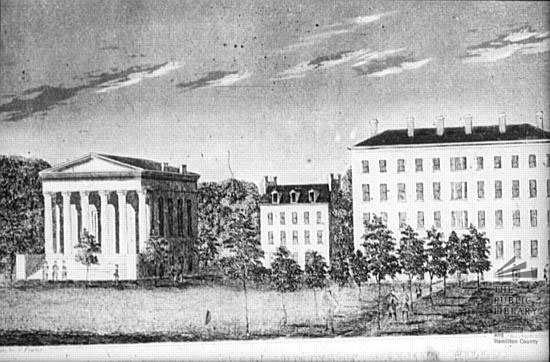
Historic engraving of Lane Seminary's buildings in Cincinnati in the 1800s
Lane Seminary as it stood in the 1800s — the buildings are gone; the marker stands at 2820 Gilbert Ave. Historic image via Wikimedia Commons.
3STOP

Lane Seminary Debates Site

2820 Gilbert Ave, Cincinnati, OH 45206 (Walnut Hills) · Marker on the former seminary grounds — now a Cadillac dealership

Drive-by · exterior storytelling stopHistorical marker at the curb · no building to enter

In 1834, students at Lane Seminary held eighteen days of debates on slavery and abolition, organized by student Theodore Dwight Weld. The debates radicalized the student body against slavery — and against the then-respectable "colonization" position. When the trustees banned further discussion, a large group of students — the "Lane Rebels" — withdrew en masse, many going on to Oberlin College. It was a nationally reported event that pushed American abolitionism toward immediatism. Calvin Stowe taught here: this is the institutional link between stops 2 and 8.

Straight talk — the seminary itself was demolished in 1956. There's nothing to tour but the marker and the ground — the story is the stop, and it's a great one: teenagers and twenty-somethings, many from slaveholding families, arguing day after day until a majority converted to immediate abolition, then defying their own trustees and walking out. The family web here is tight: the seminary's president was Lyman Beecher — Harriet Beecher Stowe's father — and the trustees voted the ban while he was away in the East raising money. Many of the Rebels landed at Oberlin College, which opened its doors to them and became a furnace of abolition; the Rebels fanned out across the North as lecturers and preachers, and some ran Underground Railroad stations of their own.
Directions Download MP3
Read the narration script
Slow down here, and look for the marker. There is no great building anymore — the seminary that stood here was torn down in nineteen fifty-six, and a car dealership stands where it was. But in eighteen thirty-four, this ground held eighteen days that changed America. Lane Seminary was a school for preachers, and its president was Lyman Beecher — the same Lyman Beecher whose daughter Harriet lived just down this street, and whose son-in-law Calvin taught in these classrooms. In February of eighteen thirty-four, the students organized a series of debates — eighteen evenings of them. And these weren't boys playing at argument. Many of them were sons of slaveholders, sent north to study, and they brought in the testimony of men and women who had lived slavery from the inside. Night after night they took up the questions: Is slavery a sin? And what is to be done — freedom someday, far away, in some colony across the ocean — or freedom now, immediately, for everyone? Led by a tireless young organizer named Theodore Dwight Weld, the students came out for freedom — immediately, for everyone — and against the whole idea of colonization. The debates were reported in newspapers across the country; a school argument had become national news. Then the trustees stepped in. While President Beecher was away in the East raising money, the board voted to shut the discussion down: no more talk of abolition, on pain of expulsion. So the students did something braver than debating. They walked out. Dozens of them — the Lane Rebels — left their school, their funding, and their futures behind. Many landed at Oberlin College, up in northern Ohio, which opened its doors to them — and Oberlin became one of the hottest furnaces of abolition in America. The Rebels fanned out across the North as lecturers, preachers, and teachers — and some of them ran Underground Railroad stations of their own. Grown men with power told them to sit down. They stood up instead. Remember that, when somebody tells you young folks can't change a country.

Sources: Ohio History Connection · Dickinson College, "Slavery and Abolition in the U.S." archive · researched October 19, 2026

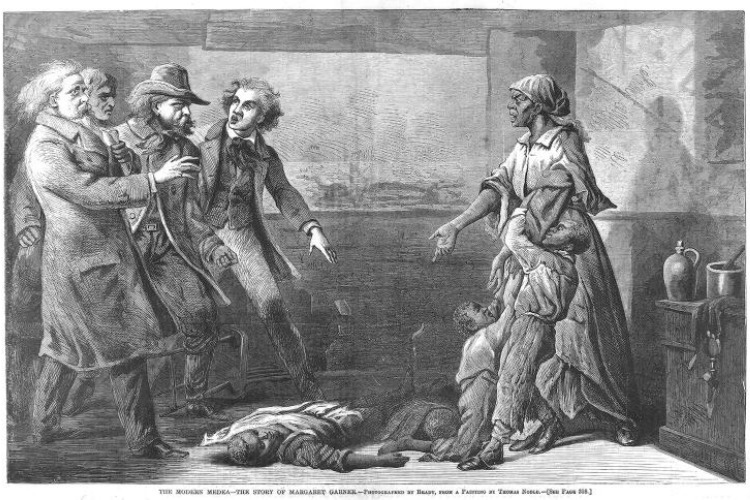
The 1867 engraving 'The Modern Medea — The Story of Margaret Garner,' showing Margaret Garner facing the marshals in the Kite house
"The Modern Medea — The Story of Margaret Garner," the 1867 Harper's Weekly engraving after Thomas Satterwhite Noble's painting. Public domain, Library of Congress.
4STOP

Margaret Garner Site

Near Sixth St & Mill Creek, Cincinnati, OH (West End/Queensgate) · The Kite house stood near this intersection

Storytelling stop · narrate from the carNo standing building — the house is goneDocumented history — no legend attached

Margaret Garner was born June 4, 1834, enslaved at the Maplewood plantation in Boone County, Kentucky, owned by Archibald K. Gaines. On the night of January 27–28, 1856, Margaret, her husband Robert, and their four children escaped, crossed the frozen Ohio River on foot, and were sheltered at the house of Joseph and Elijah Kite, free Black residents, near this spot. U.S. marshals stormed the house — and rather than see her children returned to slavery, Margaret killed her two-year-old daughter Mary and wounded the others before she was subdued. The two-week trial that followed — her lawyer was abolitionist John Jolliffe — became a national sensation over whether she would be tried as a person or returned as property. The court returned the family to Kentucky. Margaret Garner died in 1858. Her story inspired Toni Morrison's Beloved (1987).

Told straight — this is the tour's most harrowing documented story. It needs no embellishment, and none is added: no folklore attaches to this site. A portion of the Maplewood farm still stands on Richwood Road in Boone County, Kentucky — it is private property, and visits are arranged only through the Boone County Historical Society. The law hunting the Garners deserves naming: the Fugitive Slave Act of 1850 paid the officials who judged these cases more for sending a person back than for setting them free, and denied the accused a jury — even the right to testify. That is why Jolliffe fought for a murder trial: under the law, a murderer is a person, with rights and a defense. Property cannot commit a crime.
Directions Download MP3
Read the narration script
We're going to slow down now, child, and I need you to listen with your whole heart. Near this corner, Sixth and Mill Creek, stood the Kite house. It's gone now — but what happened there must never be forgotten. Margaret Garner was born June fourth, eighteen thirty-four, enslaved at Maplewood plantation in Boone County, Kentucky, held there by a man named Archibald Gaines. On a frozen night in January of eighteen fifty-six, she ran — her husband Robert beside her, their four children with them — across the ice of the Ohio River, the way Eliza Harris had done eighteen years before, to this very neighborhood, where Joseph Kite, a free Black man, took them in. For a few short hours, they were warm, and safe, and together, on free ground. But understand the law that hunted them. Under the Fugitive Slave Act of eighteen fifty, there was no safe ground anywhere in America — not really. That law reached into every free state: it ordered marshals to hunt the escaped, it paid the officials who judged these cases more for sending a person back than for setting them free, and it denied the accused a jury — denied them even the right to testify in their own defense. The marshals came to the Kite house, with the law behind them, slave catchers at the door, and the man who claimed to own this family close behind. And Margaret made a decision no mother should ever be forced to make. Rather than let her babies be carried back into bondage... she took her two-year-old daughter Mary's life with her own hands, and tried to take the others, and herself, before they dragged her away. What followed was one of the strangest, saddest trials in American history — two weeks of it, and the whole nation arguing over one question: was she a murderer — or was she property? Her lawyer, an abolitionist named John Jolliffe, fought for her to be tried for murder. Think on that, child. He wanted a murder trial — because under the law, a murderer is a person, with rights and a defense. But if Margaret was property, she could no more be guilty of a crime than a plow could. The court chose. The court called her property, and sent the whole family back across the river, into bondage. Margaret Garner died in eighteen fifty-eight, still enslaved. A hundred and thirty years later, Toni Morrison wrote Beloved from her story, so the world would finally have to look at what slavery truly was. But Margaret was no story. She was a mother. Say her name with me: Margaret Garner.

Sources: Dickinson College, "Slavery and Abolition in the U.S." archive (trial records) · Boone County Historical Society · researched October 19, 2026
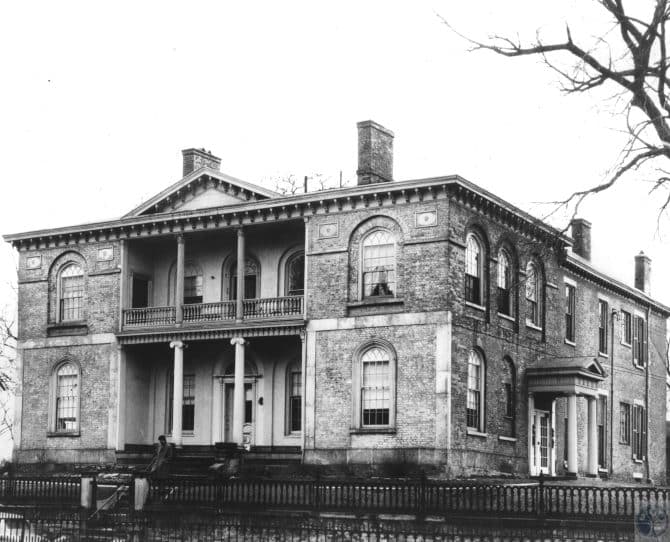
Early black-and-white photograph of the Carneal House, a two-story brick house with arched windows and a two-story porch
The Carneal House, 405 E. 2nd St., in an early photograph — Kenton County Public Library collection.
5STOP

Carneal House

405 E. 2nd St, Covington, KY 41011 · Built 1815 · The oldest home in Covington · Riverside Drive Historic District (National Register, 1971)

Private residence / bed-and-breakfast — exterior & drive-by onlyNarrate from the street · do not trespass

Built in 1815 by Thomas Carneal, one of Covington's founders, the house stands within sight of the river. Cincinnati Magazine's Underground Railroad survey records that Carneal reportedly housed runaway slaves, and a tunnel on the property concealed escapees who crossed the Ohio River; the Northern Kentucky visitor bureau likewise reports the house "still features a tunnel to the Licking River through which the owners helped slaves escape to the north." This is the tour's Kentucky-side "station": the last roof in a slave state before the river. The Covington bank also saw the documented 1847 mass escape — Perry Sanford and eleven others crossed by skiff at 4 a.m., and all reached Cincinnati.

Accuracy note — one popular account claims the Marquis de Lafayette was entertained here in 1825. The record corrects it: Lafayette's 1825 Covington reception was at a different house — a long-standing local mix-up. The tunnel and Underground Railroad tradition is separately and consistently reported.
Folklore — told as legend, not history: local stories tell of a female figure in historical dress seen in the house, said to be named for former resident Eliza Keene.
Directions Download MP3
Read the narration script
Now we're on the Kentucky side, in Covington — and this fine brick house at 405 East Second Street is the oldest home in the city, built in eighteen fifteen by Thomas Carneal, one of Covington's founders. Look how close we are to the river. And understand the ground you're standing on: everything behind us is Kentucky, where helping a human being escape was treated as a crime against property, and the penalties were prison and ruin. Help on this side of the river was the rarest kind — and the bravest. Crossings happened all along this shore. In eighteen forty-seven, twelve people — a man named Perry Sanford and eleven others — traveled twelve miles through the Kentucky dark to reach Covington, found a skiff, and pushed off at four in the morning. Every one of them reached Cincinnati. And most crossings, we will never know about at all — the ones we remember are just the ones somebody lived to tell. For a person escaping Kentucky, this house was among the last roofs before the water — and tradition in this town holds that it was a working station: the historical record of this region says Carneal reportedly sheltered freedom seekers here, and a tunnel on this property, running toward the Licking River, hid them as they moved. On a dark night, you could come off that riverbank unseen and be under a friendly roof in minutes. Now — old houses collect stories, and not all of them are true. Folks here used to swear the Marquis de Lafayette was entertained in this very parlor in eighteen twenty-five; the record says that reception happened at another house. And the local legend says a woman in old-fashioned dress is still seen in these rooms — they call her Eliza Keene. That part, child, is a ghost story, and we tell it as one. But the tunnel, and the river, and the running — that was real life and death. One more thing before we roll on: this house belongs to somebody today — it's a private home, a bed-and-breakfast — so we admire it from the street, and leave the folks their peace.

Sources: Cincinnati Magazine, "Lost City: Underground Railroad Sites" · meetnky.com (Northern Kentucky visitor bureau) · Wikipedia — Carneal House · Dickinson College archive (1847 escape)

Photograph of the Bierbower House, a tall white house with double galleries against a wooded hillside in Maysville
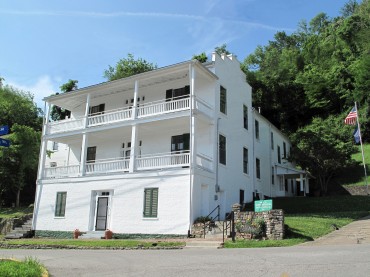
The Bierbower House, Maysville — home of the National Underground Railroad Museum. Photo via Clio.
6STOP

National Underground Railroad Museum · Bierbower House

38 W 4th St, Maysville, KY 41056 · (606) 564-3200 · bierbower.org · Founded 1994, incorporated 1995

Public museum · ticketedThu–Sat, 10am–3pm · other days by appointmentAbout $5 adults / $4 students / $3 childrenLimited accessibility — historic hillside house

The museum lives in a documented Underground Railroad safe house. The Bierbower family — descendants of German immigrants who left abolitionist Pennsylvania in 1837 to settle in slave-state Kentucky as carriage and wagon makers — hid freedom seekers beneath false floors in the small sleeping rooms off the original kitchen, until they could be moved north across the Ohio River. The hiding places survive intact. The Bierbower sons fought for the Union — and one led the 124th Colored Infantry. It is a complete arc in one house: hiding, war, emancipation. Maysville itself was one of the river's great gateways — a busy Kentucky port where the roads from the slave country's interior came down to the water. Everyone who ran from central Kentucky knew the crossings along this shore — and everyone hunting them knew it too.

Before it was here — the museum began in 1994 as the Mason County Underground Railroad Museum and African American Research Center, a one-room museum near the Simon Kenton Bridge. Call ahead to confirm hours — small museums keep flexible schedules.
Directions Download MP3
Read the narration script
Welcome to Maysville, and to the Bierbower House — today it's the National Underground Railroad Museum, and it earns the name. This town was one of the great gateways of the river: a busy Kentucky port where the roads from the slave country's interior came down to the water. Everyone who ran from central Kentucky knew the crossings along this shore — and everyone hunting them knew it too. The Bierbower family were German immigrants who did something that ought to stop every visitor in their tracks: in eighteen thirty-seven, they left Pennsylvania — a free state, where they were safe — and deliberately moved here, into slave-state Kentucky, and built their lives as carriage makers. And in this house, in the little sleeping rooms off the kitchen, they built false floors. Under those boards, in the dark, in silence, freedom seekers lay hidden — in a slave state, with slave catchers walking the streets of a Kentucky river town — listening to boots and voices on the floor above them, until the family could move them across the Ohio. A child taken down into that darkness had to learn the hardest lesson of all: make no sound, whatever you hear above you. Those hiding places are still here. You can stand in the room and see them. And when the war finally came, the Bierbower sons marched off in Union blue — one of them leading the 124th Colored Infantry, Black soldiers fighting for their people's freedom. The house kept working after that, too: in nineteen ninety-four, the museum that fills these rooms began as a one-room county museum, and a year later it became the National Underground Railroad Museum — so that what happened inside these walls would be taught, and not forgotten. Hiding. War. Emancipation. And memory. One family, one house, the whole story of America in it.

Sources: City of Maysville visitor guide (visitmaysvilleky.com) · lewisandclark.travel · Bierbower family oral history · researched October 19, 2026
Photograph of the Marshall Key House, a two-story red-brick Georgian townhouse in Old Washington, Kentucky
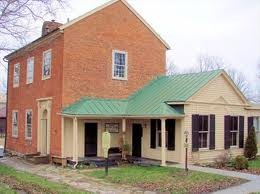
The Marshall Key House, Old Washington — the Harriet Beecher Stowe Slavery to Freedom Museum. Photo via Clio.
7STOP

Harriet Beecher Stowe Slavery to Freedom Museum · Old Washington

2124 Old Main St, Old Washington (Maysville), KY · In the Marshall Key House, where Stowe stayed in 1833 · Tours via the Old Washington Visitor's Center, 2028 Old Main St

Public · guided toursTypically Tue–Sat, 10am–4pmPark on Old Main St · easy drive-to

In 1833, 22-year-old Harriet Beecher Stowe visited Washington, Kentucky, and witnessed a slave auction on the courthouse lawn — an experience scholars identify as a direct seed of Uncle Tom's Cabin. The museum, in the Marshall Key House where she stayed, interprets that visit; local research holds that Uncle Tom and Topsy were inspired by people she encountered here — Topsy modeled on Jane Anderson of Washington. Nearby, the Paxton Inn is documented as an Underground Railroad station with a secret stairway between floors used to conceal freedom seekers. In 1833 Washington was no sleepy backwater: it was the Mason County seat, a working town of lawyers, merchants, and taverns — and the auctions were public sale days on the courthouse lawn, advertised in the newspaper, crowds gathered in the open air. Slavery and resistance stood on the very same street: the auction block on the square, the hiding place behind the inn's stairs.

The connection — nineteen years after watching that auction, Stowe published the novel (stop 2). This quiet village is where the book began — and it was hiding its own railroad work at the same time: auction block on the courthouse lawn, hiding places in the inn.
Directions Download MP3
Read the narration script
This little village is Old Washington, and it looks much like it did in eighteen thirty-three. In those days this was no sleepy backwater — it was the county seat of Mason County, a real town on the road between Lexington and the river, with lawyers, merchants, taverns, and a courthouse square. And on that courthouse lawn, on public sale days, they held slave auctions. The notices ran in the newspaper. A crowd gathered in the open air. And human beings — mothers, fathers, children — were stood up and sold to strangers, in front of the courthouse of the United States. Into this town, in eighteen thirty-three, came a twenty-two-year-old visitor named Harriet Beecher Stowe, staying at the Marshall Key House — the museum before you now — visiting friends she had made back in Cincinnati. While she was here, Harriet watched one of those auctions. She watched it the way you are hearing about it now: as a guest, a tourist, somebody free to leave. Scholars will tell you that day planted a seed in her that grew, nineteen years later, into Uncle Tom's Cabin. And the researchers here in Washington hold that she never forgot the people of this town — that a woman named Jane Anderson, of this very village, lives on in her book as Topsy — and that even Uncle Tom himself may carry something of the men she watched being sold on that lawn. And don't miss the Paxton Inn while you're here: behind its ordinary stairs is a secret stairway, built to hide freedom seekers moving through the dark — in this same little town where people were also sold in broad daylight. That's Washington, Kentucky, in one picture, child: the auction block on the square, and the hiding place behind the stairs. Slavery and resistance, on the very same street. A girl came here as a tourist, child, and left with a fire that helped end slavery. That's what paying attention can do.

Sources: Historic Washington, KY · Clio — Stowe Slavery to Freedom Museum · Atlas Obscura · City of Maysville visitor guide

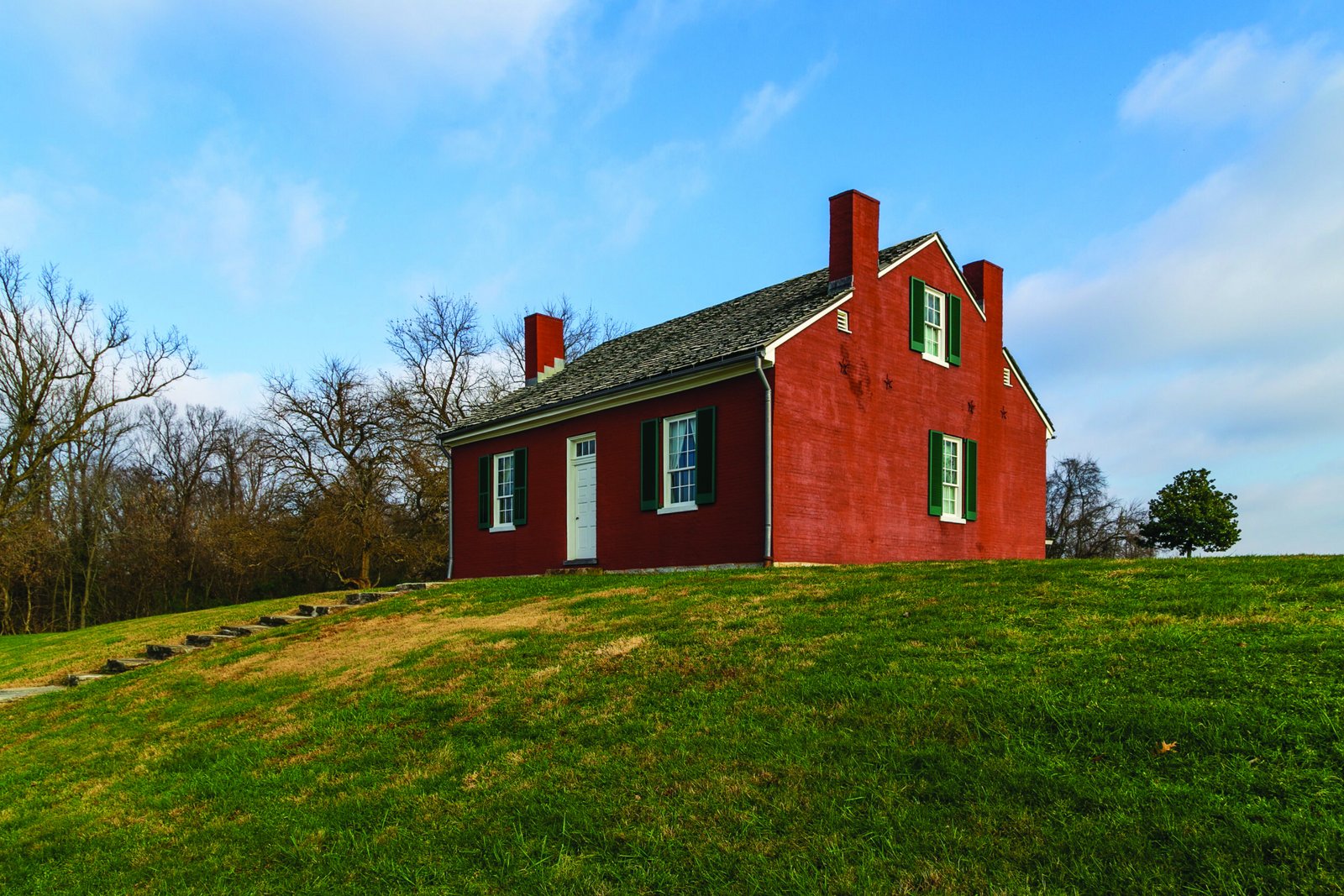
Photograph of the red brick John Rankin House standing on its grassy hilltop above Ripley, Ohio
The John Rankin House on its hill above Ripley — photo via the Ohio History Connection.
8STOP

John Rankin House

6152 Rankin Hill Rd, Ripley, OH 45167 · Ohio History Connection site · National Historic Landmark (1997)

Seasonal — April through October onlyPublic · ticketedWed–Sat 10am–5pm · Sun 12pm–5pmAbout $8–10 adultsHilltop parking · "Jacob's Ladder" steps to the river

The Rev. John Rankin (1793–1886) moved to Ripley in 1822 and published Letters on American Slavery in 1826 — begun as actual letters to his own brother back in Virginia, a man who had bought enslaved people, pleading scripture by scripture for him to let them go. Printed and passed hand to hand, the letters became standard reading for American abolitionists. From this hilltop house overlooking the Ohio River, Rankin, his wife Jean, and their children sheltered an estimated 2,000 freedom seekers across some forty years — one of the highest documented totals of any single station — and they did not work alone: Ripley was a whole town of conductors, Black and white, with John Parker (stop 9) rowing the same river about a mile away. Freedom seekers climbed the hundred-plus "Jacob's Ladder" steps up the bluff in the dark. And it was here that Calvin Stowe heard Eliza Harris's escape account (stop 10) and carried it home to Harriet.

Folklore & tradition — told as legend, not history: the famous story that Rankin signaled freedom seekers with a lantern in the window is described by scholars as "according to folklore." Local legend also reports apparitions of enslaved people climbing Jacob's Ladder on moonless nights, and visitors on the steps hearing hurried phantom footsteps behind them, turning to find no one there. A further tradition holds that Stowe penned the first lines of Uncle Tom's Cabin under this roof — told as tradition, and a measure of what this house meant to the people who fought slavery. The 2,000 sheltered are documented — they need no help from ghosts.
Plan around this — the November–March closure is the tour's biggest access constraint. In winter, treat the Ripley stops as exterior and riverfront only — or run the tour as the spring–fall experience it was researched as.
Directions Download MP3
Read the narration script
Climb up with me now, to the house on the hill. This is the Rankin House, in Ripley — and if the Underground Railroad has a beating heart, you're standing in it. The Reverend John Rankin came here in eighteen twenty-two, a Presbyterian preacher out of Tennessee and Kentucky. In eighteen twenty-six he published his Letters on American Slavery — and they began as exactly that: letters, written to his own brother back in Virginia, a man who had bought enslaved people, pleading with him, scripture by scripture and reason by reason, to let them go. Printed and passed from hand to hand, those letters became a book abolitionists carried like a testament — and that enslaved people, somehow, heard of: word traveling the grapevine that there was a preacher on a hill in Ohio who was waiting for them. His house sat up here on purpose, where its windows faced Kentucky. Down that bluff runs a stair of more than a hundred steps — they call it Jacob's Ladder — and up those steps, in the dark, came the running people. Two thousand of them. That's the family's own count, and historians stand behind it: two thousand souls sheltered by one preacher, his wife Jean, and their children, in one house, on one hill, across the better part of forty years. And the Rankins did not work alone. Ripley was a whole town of conductors, Black and white, farmers and tradesmen — and about a mile from here, down on Front Street, a Black iron-founder named John Parker was rowing across that same river at night. He's our next stop. Across the river, they called Ripley an abolitionist hellhole. Rankin called it doing God's work. Now, the old stories say he kept a lantern in the window to guide the crossers — that part is tradition, handed down, not written in the record, and we honor it as tradition. It's also said that Harriet Beecher Stowe wrote the first lines of Uncle Tom's Cabin under this roof — that, too, is tradition, but it tells you what this house meant to the people who fought slavery. And some visitors on those steps, on moonless nights, swear they hear footsteps hurrying behind them, and turn to find no one there. I'll let you decide about that on your own climb down. What no one disputes is the number: two thousand.

Sources: Ohio History Connection · Ohio History Journal · National Park Service (NHL documentation) · Dickinson College (lantern tradition) · heartofohio.com & hauntedplaces.org (legends, labeled)

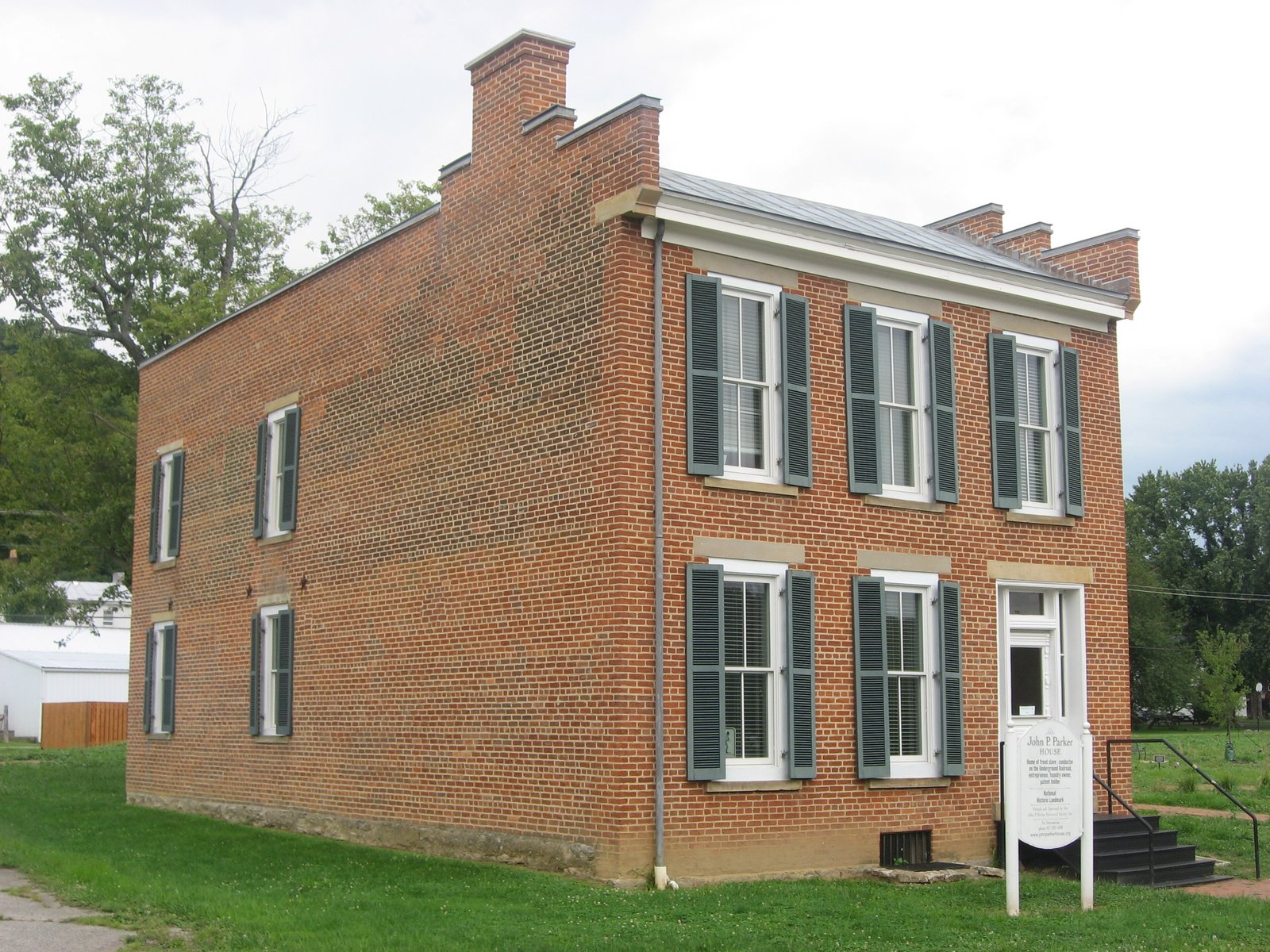
Photograph of the John P. Parker House, a two-story red-brick house with green shutters and its historical sign in front
The John P. Parker House, 300 N. Front St. — the sign out front tells his story in one breath. Photo via Wikimedia Commons.
9STOP

John Parker House

300 N Front St, Ripley, OH 45167 · John P. Parker Historical Society · (937) 392-4188 · johnparkerhouse.org · National Historic Landmark

Public · ticketed/guidedFri–Sat 10am–5pm · Sun 1pm–5pm · tours year-round by arrangement — call aheadAbout $8–10 adults

John P. Parker was born enslaved in Virginia in 1827. He worked for wages in Alabama and purchased his own freedom in 1845, settled in Ripley in 1850, and became a successful iron-foundry owner and inventor — one of the rare Black holders of U.S. patents before 1900. Then he turned conductor: Parker personally rowed across the Ohio River into Kentucky, guided freedom seekers back under cover of darkness, and sheltered them — aiding an estimated 900+ people. During the Civil War he recruited for the 27th U.S. Colored Troops. The house has been owned by the John P. Parker Historical Society since the late 1990s and open to visitors since 2002. Parker had learned the iron trade as an enslaved boy around the foundries of Mobile, Alabama; free in Ripley, his foundry put Black and white men to work side by side, he bought this house and raised his family here with his wife Miranda, and his patents included one for his tobacco press. Late in life he dictated his whole story aloud so it would be written down and kept — which is how we know the names, the numbers, and the river crossings in the rain.

The tour's centerpiece — Parker is the rare conductor who was himself formerly enslaved, a self-made industrialist, who then went back across the river — the most dangerous direction — again and again. Tell his numbers: born 1827 · free 1845 · Ripley 1850 · 900+ guided. No folklore attaches to this house; the documented life outperforms any legend.
Directions Download MP3
Read the narration script
Across Front Street from the river stands a plain brick house — and the man who lived in it is, to my mind, the greatest hero on this whole tour. His name was John P. Parker. He was born enslaved in Virginia in eighteen twenty-seven. Sold south as a boy, down to Alabama, he grew up around the iron foundries of Mobile and learned a trade with his hands — the trade that would one day make him free in more ways than one. Working for wages whenever a chance came, saving dollar by dollar, he did something extraordinary: in eighteen forty-five, he bought himself — a man purchasing his own body back from the people who claimed to own it. Free, he came north and settled here in Ripley in eighteen fifty, opened an iron foundry, built a business that put Black and white men to work side by side, bought this house, raised a family with his wife Miranda — and became an inventor, one of the very few Black men of his century to hold United States patents, including one for his tobacco press. And then, night after night, this free and prosperous man did the most dangerous thing a person could do: he rowed back. Back across the river, into Kentucky, into the slave state — guiding freedom seekers out of the dark and into his own house. If he'd been caught on that far shore, no patent, no property, no free papers would have saved him. The count of those he personally conducted to freedom stands above nine hundred. Nine hundred. When war came, he recruited Black soldiers for the 27th United States Colored Troops. And late in life, Parker sat down and dictated his whole story out loud, so it would be written down and kept — which is how we know the names, the numbers, and the river crossings in the rain. He didn't just escape the fire, child. He kept walking back into it, carrying people out. That's John Parker. Remember his name.

Sources: John P. Parker Historical Society (johnparkerhouse.org) · Ohio Magazine (2025) · National Park Service · researched October 19, 2026
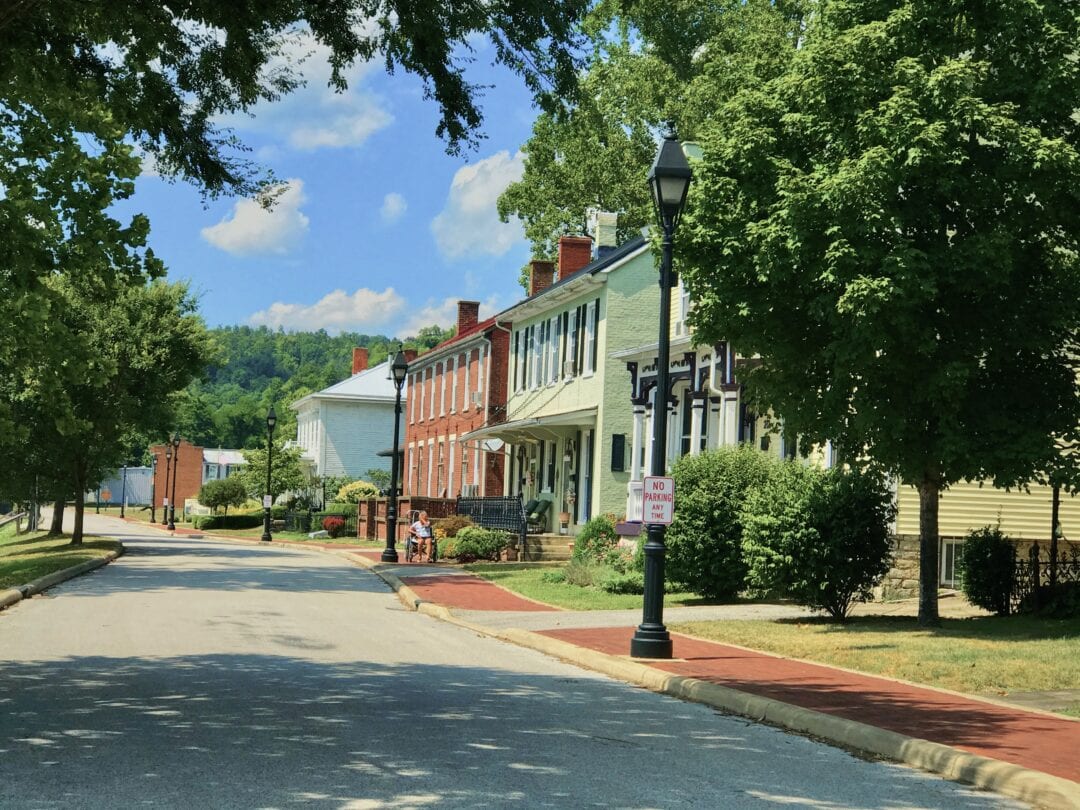
Photograph of Front Street in Ripley, Ohio — a tree-lined row of historic houses a short walk from the Ohio River
Front Street, Ripley — the historic row along the river, a short walk from the crossing marker. Photo via Roadtrippers.
10STOP

Ripley Riverfront · The Eliza Harris Crossing

Ohio River shoreline at the foot of Front St, Ripley, OH · Historical marker on Front St · The tour finale

Public riverfront · free, always openPark on Front St and walk to the waterBest at sunset, facing Kentucky

In February 1838, an enslaved woman named Eliza Harris fled Kentucky with her child in her arms. Reaching the Ohio River at Ripley, she found it frozen — and crossed on the ice, breaking through five times, climbing out each time, until she reached this shore. She was sheltered onward — the documented chain runs through Levi Coffin's house in Newport, Indiana — and reached Canada and freedom. Canada was the necessary end of the road: after the Fugitive Slave Act of 1850, no ground anywhere in the United States was truly safe for a hunted mother — Ohio could shelter her for a night, but only Canada could let her raise her child free. Her account was told to Calvin Stowe at the Rankin House and became the Eliza of Uncle Tom's Cabin — the novel's famous ice-crossing scene. The National Park Service confirms Eliza later returned south to help others escape.

Fully documented — no folklore at this stop: the account rests on the National Park Service and Stowe's own sourcing. The novel's dramatized version differs in details from the historical account — where the narration leans on the novel, it says so.
Directions Download MP3
Read the narration script
This is where our road ends, child — on the shore of the Ohio River, at Ripley. Look across at Kentucky. In February of eighteen thirty-eight, a woman stood over there in the cold. Her name was Eliza Harris, and everything she loved was in her arms — her baby. The river was frozen... but freezing ain't the same as solid. She stepped out onto that ice, and it broke beneath her. Not once. Five times, that river took her down into black, freezing water. And five times, that mother climbed out, her child held high, and kept on crossing — until her feet touched free Ohio ground. On this shore, the Ripley network took her in — the same web of families you've met all along this road, the Rankins on their hill among them. From here she was passed hand to hand, station to station, until she reached the house of Levi Coffin over in Indiana — the man they called the President of the Underground Railroad, the same Levi Coffin we met at the start of this road, in Cincinnati. And Coffin's road led where every road had to lead in those years: to Canada. Because understand this, child — in Eliza's day, and even more after the Fugitive Slave Act of eighteen fifty, there was no truly safe ground for a hunted mother anywhere in the United States. Ohio could shelter her for a night. Only Canada could let her raise her child free. She made it all the way to Canada. And hear me now — when she was safe... she came back. Again and again, she came back south, into the danger, to lead others out. That is who Eliza Harris was. Her story traveled, too: it was told to Calvin Stowe, up the hill at the Rankin House, and he carried it home to Harriet — and Eliza's crossing, a mother on the breaking ice, became the most famous scene in Uncle Tom's Cabin, read by millions around the world. But this river... this river is where it truly happened. Remember her name.

Sources: National Park Service (Eliza Harris account) · Ohio History Connection · researched October 19, 2026
Before you go — plan the day

Every stop on this tour was researched on October 19, 2026. The practical calls below come straight out of that research — they're the difference between a great day and a locked gate.

Run it Friday or Saturday

Those are the only days every ticketed stop is open. The overlap: Freedom Center Wed–Sun · Stowe House Thu–Sun · Maysville museum Thu–Sat · Old Washington museum Tue–Sat · Parker House Fri–Sun. A Sunday works if you drop the Maysville museum.

Respect the Rankin season

The Rankin House — the tour's anchor — is open April through October only. November through March, Ripley is exterior and riverfront stops only. Market your run as a spring–fall day, or say plainly which version you're driving.

Call ahead — two numbers

Parker House: (937) 392-4188. Maysville museum: (606) 564-3200. Both welcome arranged tours outside posted hours, and both are small operations — a call the day before saves a locked door.

Private & vanished stops

The Carneal House is a private home and bed-and-breakfast: exterior narration from the street, never presented as enterable. The Garner and Lane stops have no standing building — the narration carries them. Maplewood in Boone County is private property; visits only through the Boone County Historical Society — never route drivers there unannounced.

You made the crossing — leave your review

You drove the whole road, Cincinnati to Ripley. Tell the next carload what they're in for: tap the stars, write a line or two, sign your name. The button below opens your own email app with the review addressed and filled in — just hit send.

Tap a star to rate the tour

Welcome to the tour
Track 1 of 12 · Press play, then just drive — stories advance on their own
0:00 / 2:08